Featured
Table of Contents
That maximizes money in the brief term, and you may have 3 to four years to save towards the settlement quantity. Really unsafe to credit ratings, primarily as a result of missed settlements and a negative "cleared up" mark that might stay on your credit record for as much as seven yearsMay be just alternative if various other choices (financial obligation consolidation, balance transfer bank card, debt mercy) aren't possibleTypically calls for a cost to the third celebration, which could balance out some or all of the financial savings from financial obligation settlementMay assist you stay clear of insolvency if you have actually missed numerous paymentsNot all creditors collaborate with financial obligation negotiation companies Financial obligation mercy might be ideal for you if you are experiencing a monetary difficulty that makes it almost difficult to pay for your debt balances.
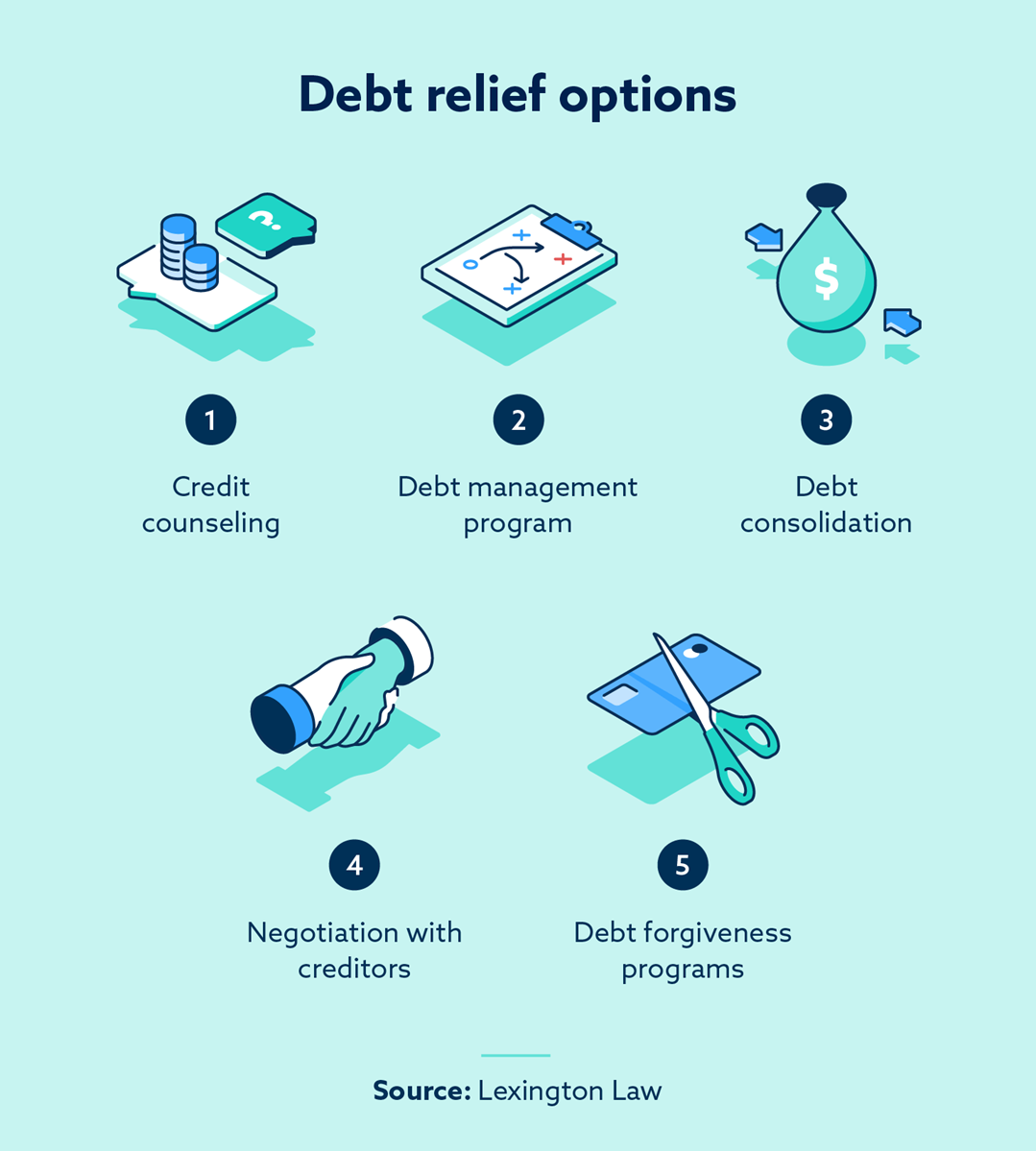
With a DMP, you make one month-to-month settlement to the credit score therapy firm. Those funds are after that distributed to financial institutions of your unsafe financial debts, such as charge card and installment fundings. The agency deals with your financial institutions to reduce rates of interest or forgo costs, but some creditors may reject such concessions.
A financial obligation loan consolidation car loan combines your eligible financial debts right into one new funding. It can aid you pay for financial obligation if you're able to safeguard a car loan rate that's lower than the typical price of the accounts you're settling. However, you have to avoid acquiring financial debt on those newly removed accounts or your financial obligation might expand even greater.

These cards commonly use a 0% passion introductory duration of as much as 21 months. That provides you lots of time to get rid of or significantly lower your equilibrium while making interest-free repayments. For some individuals facing overwhelming financial obligation, bankruptcy might be the only way to stop collection proceedings and legitimately settle their financial debts.
Finding Support Through APFSC Fundamentals Explained
You may require it if your financial institution or a collection company ever attempts to gather on the financial obligation in the future. The letter can verify you don't owe what the collection firm's records reveal. Yes, most of the times, the internal revenue service thinks about forgiven debt as gross income. When a loan provider forgives $600 or even more, they are required to send you Form 1099-C.
Debt mercy or negotiation virtually constantly harms your debt. Anytime you resolve a financial debt for much less than you owe, it might look like "resolved" on your credit history report and impact your credit report for 7 years from the date of settlement. Your credit history can also go down significantly in the months leading to the mercy if you drop behind on payments.
Facts About Complimentary Informational Financial Literacy Resources Offered to You Revealed
This scenario usually results from underreporting income, not submitting returns on time, or inconsistencies discovered throughout an IRS audit. The effects of collecting tax obligation financial obligation are severe and can consist of tax obligation liens, which provide the Internal revenue service a lawful case to your residential property as safety for the financial debt.
Greater passion rates on available credit history. Wages and Bank Accounts internal revenue service can impose (seize) wages and bank accounts to satisfy the financial obligation. Decreased revenue and disruption of necessary financial processes. Residential or commercial property Seizure In severe situations, the IRS can seize and sell property to cover the financial debt. Loss of useful properties and potential variation.
Depression, stress and anxiety, and various other psychological health and wellness concerns. Social Preconception Dealing with lawful action from the internal revenue service can bring social stigma. Damage to online reputation and partnerships. Employment Opportunities A poor credit report due to tax financial obligation can restrict employment chances. Difficulty searching for or keeping a task. Government Advantages Tax financial obligation may influence qualification for federal government advantages, such as Social Security and Medicaid.
All about Questions You Should Ask a Millennials and Credit Card Debt: Building Smart Credit Without Financial Risk : APFSC Organization
The OIC takes into consideration numerous variables, including the taxpayer's earnings, expenses, possession equity, and capacity to pay. Effectively bargaining an OIC can be complex, needing a thorough understanding of the internal revenue service's standards and a strong argument for why your deal straightens with your capacity to pay. It is essential to keep in mind that not all applications are accepted, and the procedure needs in-depth monetary disclosure.
The IRS analyzes your general financial scenario, including your earnings, expenses, property equity, and capacity to pay. You have to likewise be existing with all filing and repayment needs and not be in an open insolvency proceeding. The internal revenue service also considers your compliance background, evaluating whether you have a document of timely filing and paying tax obligations in previous years.
See This Report on Real Stories of Families Who Achieved Freedom
The application procedure for an Offer in Concession entails a number of detailed actions. You need to finish and submit IRS Form 656, the Deal in Compromise application, and Kind 433-A (OIC), a collection details declaration for people. These kinds need extensive economic information, including information about your revenue, debts, expenses, and possessions.
Back tax obligations, which are unsettled taxes from previous years, can significantly boost your total internal revenue service financial debt if not addressed promptly. This debt can accumulate rate of interest and late settlement charges, making the initial quantity owed much larger with time. Failure to repay tax obligations can cause the IRS taking enforcement activities, such as providing a tax obligation lien or levy versus your home.
It is necessary to resolve back tax obligations as soon as possible, either by paying the sum total owed or by organizing a payment plan with the IRS. By taking proactive steps, you can prevent the accumulation of additional passion and penalties, and protect against a lot more hostile collection activities by the IRS.
One typical reason is the belief that the taxpayer can pay the sum total either as a swelling amount or via a layaway plan. The IRS also considers the taxpayer's earnings, expenses, property equity, and future earning potential. If these variables indicate that the taxpayer can pay for to pay even more than the provided quantity, the IRS is most likely to reject the deal.
The Best Guide To Being Cautious from Debt Relief Fraud
It is important to supply precise and full information in your application and to speak with a tax obligation professional to enhance the opportunities of acceptance. Managing internal revenue service financial obligation can be complicated and overwhelming. Tax obligation professionals, such as Certified public accountants, tax lawyers, or enlisted representatives, can supply important support. They have the know-how to browse the details of tax obligation legislation and internal revenue service procedures.

Table of Contents
Latest Posts
The Best Guide To Questions to Ask Before Signing Up
Getting The Support Offered for Anyone's Debt Relief Journey To Work
Some Ideas on The Advantages and Disadvantages of Bankruptcy You Need To Know
More
Latest Posts
The Best Guide To Questions to Ask Before Signing Up
Getting The Support Offered for Anyone's Debt Relief Journey To Work
Some Ideas on The Advantages and Disadvantages of Bankruptcy You Need To Know